
Findings
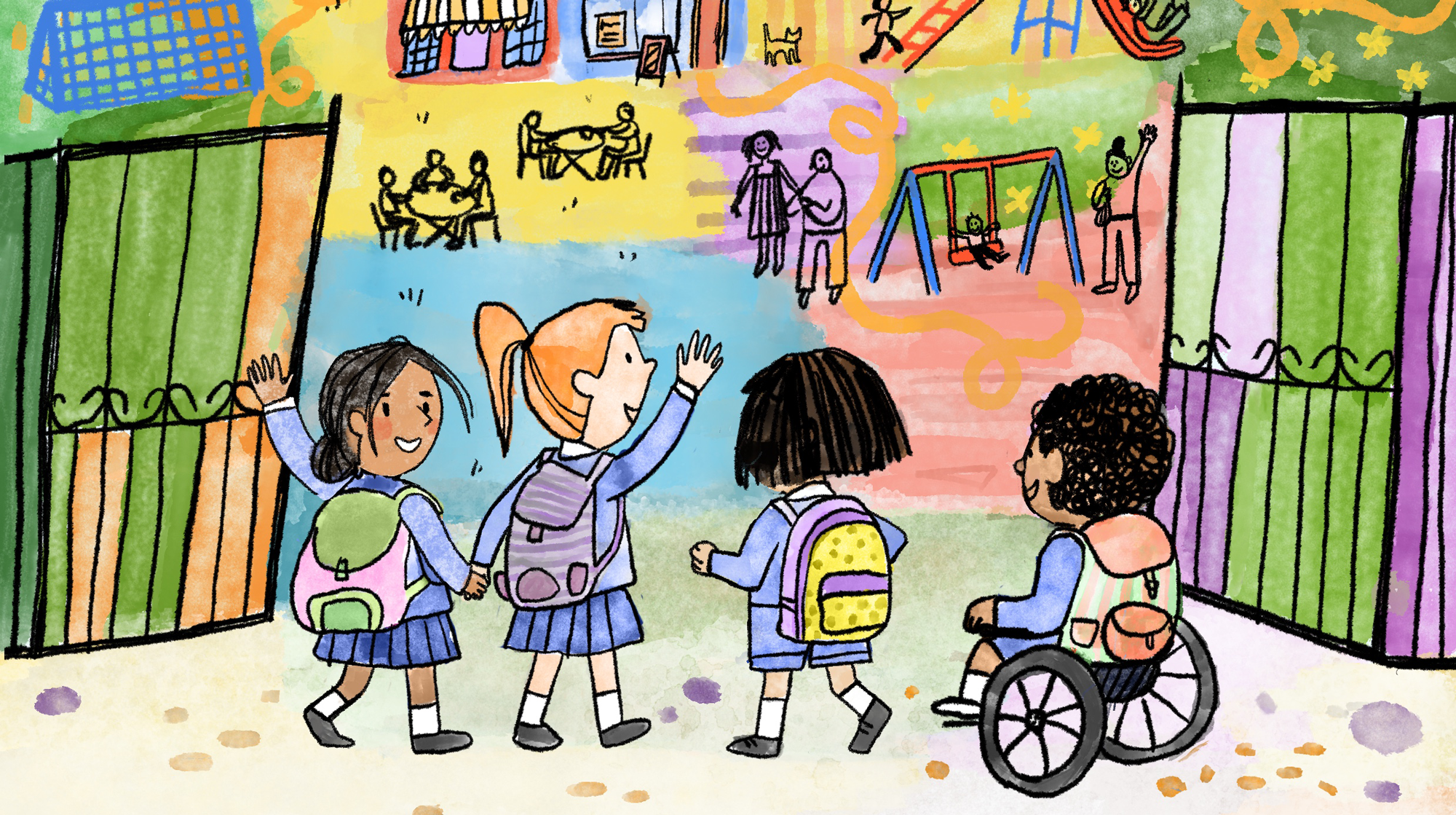
Our findings show that there are several key places where children form the relationships that help them feel at home and welcome in their communities. For an overview of this data, our infographic highlights these key places. In addition, children were overwhelmingly positive about school as another place where they made diverse friendships. Even though our project is called ‘Beyond School Gates’, we therefore recognize the important role schools play in fostering community cohesion for young people.
“I would be a bit more ‘out there’ because people already know my story.”
Statistics
Parent Survey
37.97%
agreed that there were opportunities to mix with carers/parents from different ethnic backgrounds in schools
54.2%
agreed or strongly agreed that they as parents meet people through their children’s school that they would not meet otherwise
58.6%
agreed or strongly agreed that their children’s friendships are a way that they as parents meet people they would not meet otherwise
Parents reported their children had significantly more opportunity to meet children of a different ethnic background at school than at informal activities
Parents who had a child attending a more diverse school were significantly more likely to report a positive attitude towards local diversity and had a greater number of friends with a different ethnic background
Children Survey
75%
of children see social mixing among children of different ethnic backgrounds in school
over 70%
of children live in an inclusive environment where people from different backgrounds mix together
60%
of children see social mixing among children of different ethnic backgrounds outside of school
two thirds
of children expressed positive attitudes towards diversity. There was no significant differences between ethnicity
over 90%
of young children think they can understand how others, different from them in some way view things even a little bit. There was no significant differences between ethnicity
over 65%
of children hold strong positive views surrounding different ethnic backgrounds of people
just under
80%
of children are exposed to diversity through their parents friendship groups
80%
of children think their parents would be very happy if they were to become friends with someone different to them in some way
over 95%
of children reported having friends, felt like they belong and do not feel awkward or out of place when at school. There was no significant differences of belonging at school between ethnicity
Ethnic majority children on average, were more willing and happy to interact with children from a different ethnic background to themselves compared to ethnic minority children
Ethnic majority parents were significantly more likely to be happy and provide support to their child in a diverse friendship compared to ethnic minority parents
Ethnic minority students have more diverse friendship groups both inside and outside of the class than ethnic majority students
“I have lots of friends who support me.”
Policy Briefs & Reports
We have published several policy briefs on this data, which you can access below. We will continually update this page as new reports become available.
